Enrolment options
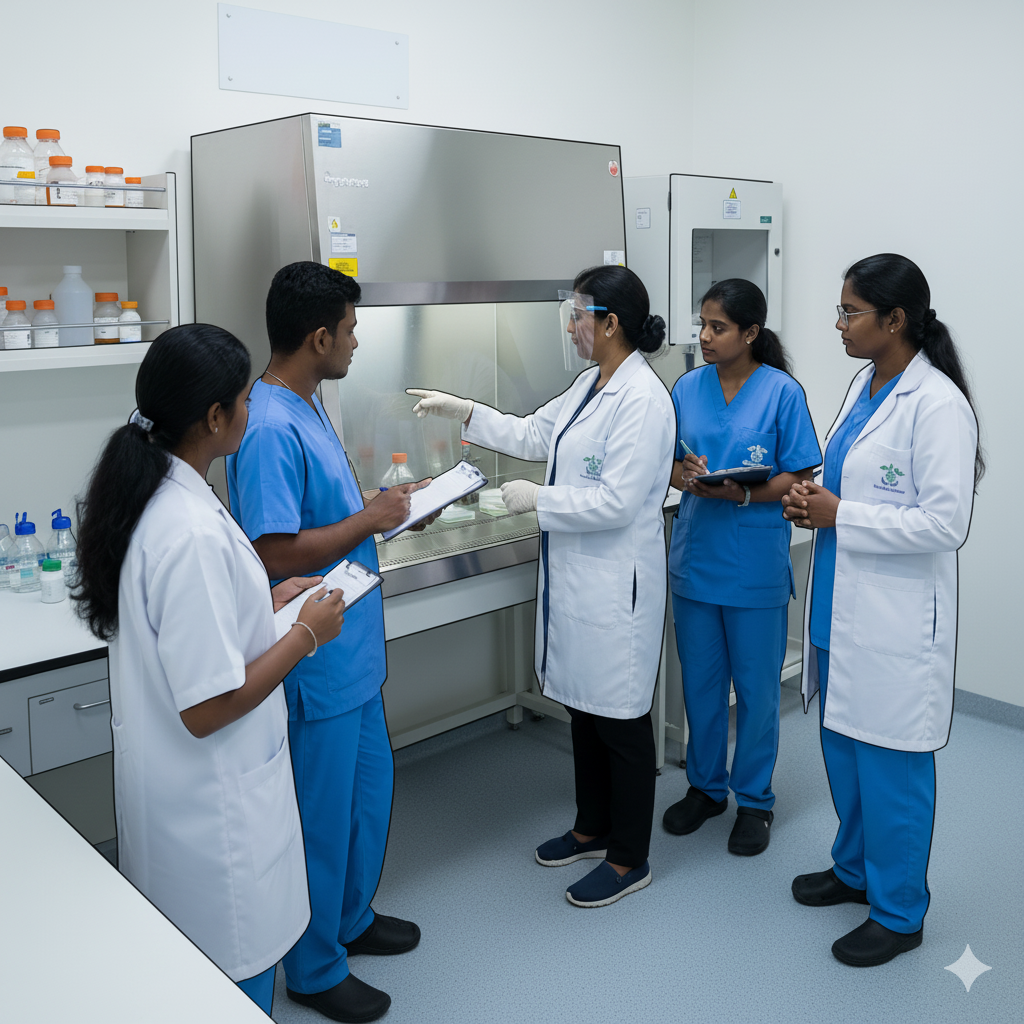
This training program will equip MLTs with the knowledge and skills necessary to cultivate a robust biosafety culture within their laboratories. The core objective is to shift from reactive incident response to proactive prevention of laboratory accidents, exposures, and injuries.
Key areas covered include:
-
Biosafety Culture: Understanding its importance, the role of leadership, and individual responsibility in fostering a safety-first mindset.
-
Risk Assessment and Management: Practical methodologies for identifying, evaluating, and mitigating biological and operational hazards specific to clinical and public health laboratories in Sri Lanka.
-
Best Practices in Biosafety: Detailed review and implementation of local and international biosafety guidelines, including correct use of Personal Protective Equipment (PPE), safe handling of infectious agents, and proper use of biosafety cabinets.
-
Accident Prevention & Emergency Response: Developing standard operating procedures (SOPs) for handling spills, exposures, and other emergencies, along with investigating and learning from past incidents.
Successful completion will ensure MLTs are , capable of minimizing laboratory risks, protecting themselves, their colleagues, and the public health system.
- Teacher: System Administrator