Available courses
|
Section |
Contents |
|
i |
Title Page |
|
ii |
Quality Manual Release Authorization |
|
iii |
Amendment Sheet |
|
iv |
Contents |
|
1 |
Scope |
|
2 |
References to other documents |
|
3 |
Terms and Definitions |
|
3.1 |
Definitions |
|
3.2 |
Abbreviations |
|
3.3 |
Distribution List |
|
4 |
MANAGEMENT REQUIREMENTS |
|
4.1 |
Organization and Management Responsibility |
|
4.2 |
Quality Management System |
|
4.3 |
Document Control |
|
4.4 |
Service Agreements |
|
4.5 |
Examination by Referral Laboratories |
|
4.6 |
External Services and Supplies |
|
4.7 |
Advisory Services |
|
4.8 |
Resolution of Complaints |
|
4.9 |
Identification and Control of Non Conformities |
|
4.10 |
Corrective Action |
|
4.11 |
Preventive Action |
|
4.12 |
Continual Improvement |
|
4.13 |
Control of Records |
|
4.14 |
Evaluation and Audits |
|
4.15 |
Management Review |
|
5 |
TECHNICAL REQUIREMENTS |
|
5.1 |
Personnel |
|
5.2 |
Accommodation and Environmental Conditions |
|
5.3 |
Laboratory Equipment, Reagents and Consumables |
|
5.4 |
Pre-examination Processes |
|
5.5 |
Examination Processes |
|
5.6 |
Ensuring Quality of Examination Results |
|
5.7 |
Post-examination Processes |
|
5.8 |
Reporting of Results |
|
5.9 |
Release of Results |
|
5.10 |
Laboratory Information Management |
Genome Biology
Genomic Data Generation
NGS File Formats @ QC
Genomic Assembly. Quality control and Annotation
Genomic Annotation & Comparative Genomics
Phages, Plasmids ,and Prophages Detection in Assemblies
AMR & Virulence: Detecting Genes and Genomic Elements
Phylogenetics
- Teacher: System Administrator
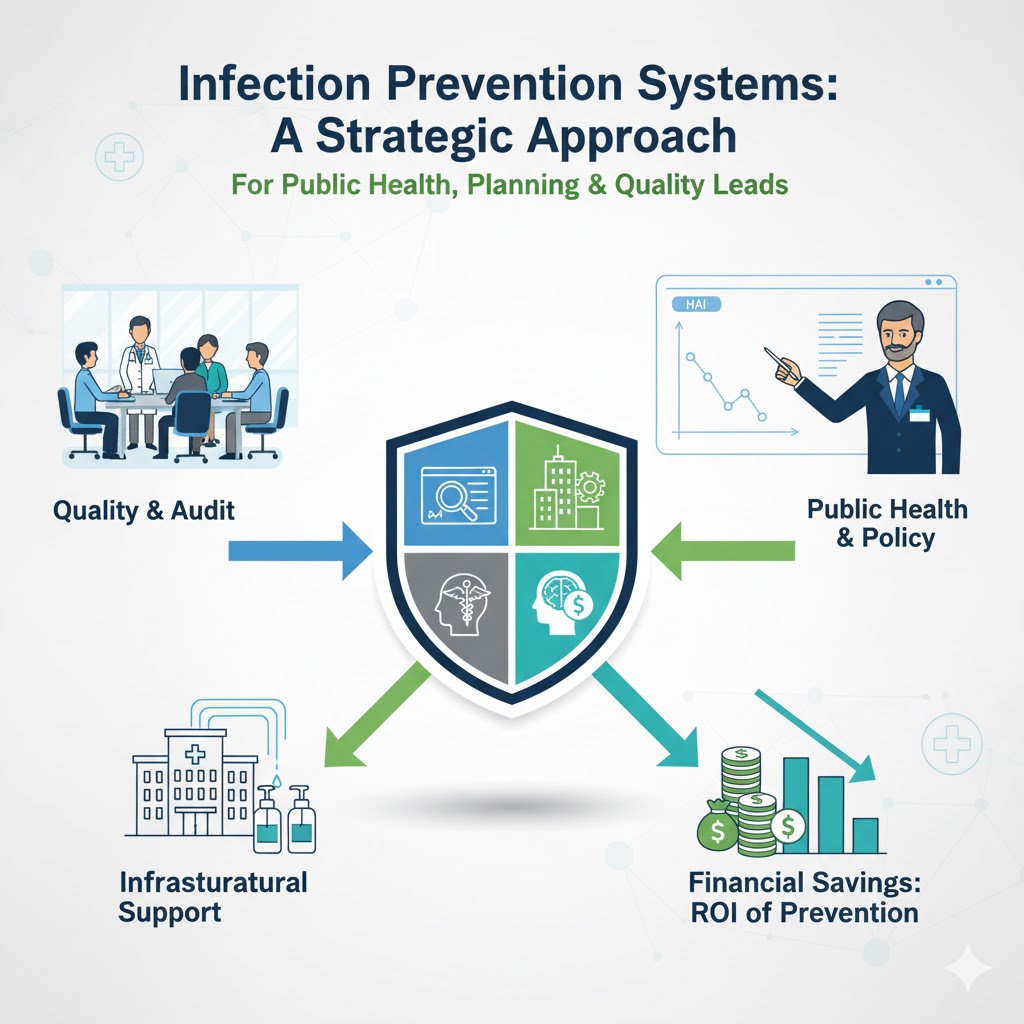
Healthcare-Associated Infections (HAIs) are, fundamentally, preventable quality failures that translate into billions in avoidable costs and unacceptable mortality rates globally. This program will shift the conversation from HAIs being a frontline nursing challenge to a critical administrative and planning challenge.
Over the next session, we will analyze the true regional economic burden of HAIs, explore the ROI of mandated evidence-based practice—specifically prevention bundles—and review the organizational framework necessary to transform our IPC protocols from static guidelines into a dynamic, data-driven quality system. Your role is vital in ensuring this system is resourced, audited, and enforced."
- Teacher: System Administrator

This training program will equip MLTs with the knowledge and skills necessary to cultivate a robust biosafety culture within their laboratories. The core objective is to shift from reactive incident response to proactive prevention of laboratory accidents, exposures, and injuries.
Key areas covered include:
-
Biosafety Culture: Understanding its importance, the role of leadership, and individual responsibility in fostering a safety-first mindset.
-
Risk Assessment and Management: Practical methodologies for identifying, evaluating, and mitigating biological and operational hazards specific to clinical and public health laboratories in Sri Lanka.
-
Best Practices in Biosafety: Detailed review and implementation of local and international biosafety guidelines, including correct use of Personal Protective Equipment (PPE), safe handling of infectious agents, and proper use of biosafety cabinets.
-
Accident Prevention & Emergency Response: Developing standard operating procedures (SOPs) for handling spills, exposures, and other emergencies, along with investigating and learning from past incidents.
Successful completion will ensure MLTs are , capable of minimizing laboratory risks, protecting themselves, their colleagues, and the public health system.
- Teacher: System Administrator

Water is a fundamental resource, but its safety is not guaranteed. The presence of harmful microorganisms can turn a vital necessity into a significant public health threat, leading to widespread waterborne diseases.
As public health inspectors, your primary role is to act as a frontline defense, ensuring that the water consumed by our communities is safe from microbial contamination. This lecture will guide you through the critical steps of water quality surveillance, from understanding the microbes of concern to the legal and practical frameworks that empower our work. By mastering these principles, we can effectively protect public health and build trust in our water systems.
- Teacher: System Administrator

Shipping Infectious Substances
- Teacher: System Administrator

The Codex Alimentarius is a collection of international food standards that have been adopted by the Codex Alimentarius Commission. Such standards cover all the main foods and also material used in the further processing of food. Codex provisions concern the hygienic and nutritional; quality of food, including microbiological norms, food additives, pesticides and veterinary drug residues, contaminants, labelling and presentation, and methods of sampling and risk analysis. The Codex Alimentarius can safely claim to be the most important international reference point in matters concerning food quality. Its creation, moreover, has generated food-related scientific research and greatly increase the world community’s awareness of the vital issues at stake food quality, safety and public health.
- Teacher: System Administrator